

In this article Understanding the basics of e-commerce product demand forecasting Top Demand...

Effective cross-channel inventory forecasting helps e-commerce businesses manage stock levels across platforms like Shopify, Amazon, and physical POS systems. By consolidating demand from all channels, businesses can make better replenishment decisions, reducing stockouts and overstocking. This approach improves turnover and ensures a consistent customer experience.
In this article
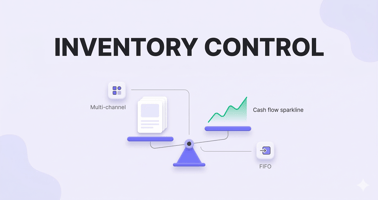
Multi-channel ecommerce brands need cross-channel inventory forecasting that shares one demand signal across Amazon, Shopify, and wholesale. The best multichannel inventory management software connects replenishment math to the same ledger finance uses for COGS.
Why Multi-Channel Forecasting Matters
Selling on multiple platforms divides demand across different systems, leading to incomplete data. Without cross-channel inventory visibility, replenishment decisions are made based on partial information, often resulting in shortages in one channel and overstock in another.
Multi-channel forecasting aggregates sales velocity, sell-through rates, and seasonality across platforms, giving a unified view of total demand. This replaces fragmented planning with a structured approach, ensuring stock levels protect availability across all your sales outlets.
How to Reduce Stockouts and Overstock
To effectively balance stock across channels, follow this operational structure:
- Consolidate inventory data: Gather sales info from Shopify, Amazon, and POS systems into one system.
- Aggregate daily demand: Combine demand from each channel for a unified picture of total sales volume.
- Measure demand variance: Calculate fluctuations to determine the real risk of stockouts.
- Calculate safety stock: Define a buffer for unexpected demand spikes.
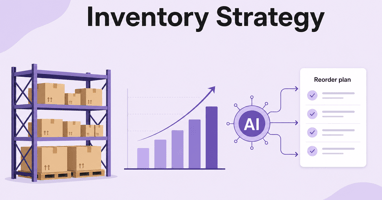
- Automate replenishment: Use system alerts to trigger reorders when stock hits your threshold.
Safety Stock and Reorder Point Formulas
To calculate these thresholds accurately, use the following logic:
- Safety Stock:
Z × σLT(total demand)(Where Z is the service level factor, and σLT reflects variance during lead time). - Reorder Point:
(Total Daily Demand × Lead Time) + Safety Stock
Example: With a total demand of 75 units/day, an 8-day lead time, and a safety stock of 69, your reorder point is 669 units. Triggering a purchase order here ensures consistent availability despite fluctuations.
Cross-Channel Inventory Visibility
Accurate multi-channel demand planning relies on comprehensive data inputs, including:
- Unified sales velocity and platform-specific sell-through rates.
- Lead time history and supplier reliability variance.
- Promotion intervals and warehouse transfer cycles.
Without this visibility, your stock could show as "available" in one warehouse while another faces an urgent shortage. For Amazon FBA sellers, an integrated approach prevents fragmented reserves between your Shopify warehouse and FBA, ensuring inventory is always deployed where demand is highest.
Choosing the Right Forecasting Tools
The best cross-channel inventory forecasting tools provide aggregated demand modeling, automated reorder triggers, and multi-location visibility. Top solutions generally fall into ERP forecasting modules, SaaS analytics platforms, or marketplace-focused planners.
If enterprise tools are outside your current budget, consider modular Shopify apps or structured, scalable spreadsheet models. Regardless of the tool, the goal is to shift your team from manual data entry to strategic inventory oversight.
Conclusion
Fragmented forecasting creates unnecessary risks. By adopting structured multi-channel demand planning, you replace isolated guesses with aggregated market logic. This stabilizes your inventory cycles, minimizes variance, and keeps your operations lean and profitable.
Further reading: Stockout Prediction & Automated Replenishment · E-commerce Demand Forecasting · Sync Amazon & Shopify Inventory
FAQ
What are the best cross-channel inventory forecasting tools for e-commerce?
A: The best tools combine aggregated demand modeling, automated reorder triggers, and real-time visibility across all sales channels. ERP systems and SaaS-based e-commerce analytics platforms are standard in this category.
How does cross-channel forecasting reduce stockouts and overstock?
A: By aggregating demand from every platform, you ensure stock is distributed based on total velocity rather than siloed data, reducing the risk of being "out" in one location while burying capital in another.
What data is required for accurate multi-channel demand planning?
A: You need unified sales velocity, sell-through rates per platform, historical lead times, supplier reliability data, and real-time inventory counts across every warehouse and digital location.
Are there reliable open-source tools for multi-channel forecasting?
A: Open-source BI platforms can be used for multi-channel forecasting, but they usually require significant manual technical setup and custom integration maintenance between your platforms and the database.
How does a cross-channel planner Amazon strategy work with Shopify?
A: An integrated planner aligns FBA stock with your own warehouse reserves. It applies a unified demand velocity model, ensuring that if sales spike on Amazon, the system suggests a transfer or reorder to protect both platforms.
What are alternatives to leading e-commerce analytics suites for inventory planning?
A: Alternatives include structured forecasting spreadsheets for smaller catalogs, modular Shopify forecasting apps for simpler integrations, and open-source BI dashboards for teams with technical resources.