
Multi-Channel Inventory Software Aligned with Your Books
Sell through Amazon, Shopify, TikTok Shop, and more while the same 3PL or warehouse fulfills the orders. NeonPanel keeps stock, batches, costs, and channel profitability on one ledger.
Unified system
- Accounting
- Inventory
- Forecasting
- AI access

The Same Stock Numbers for Ops and Finance
Warehouse teams see units, locations, receipts, and movements. Finance sees the matching inventory value, cost history, and COGS—with every number tied back to the same transactions.
One Inventory Picture Across Every Channel
Combine marketplaces, stores, FBA, AWD, 3PLs, and owned warehouses without losing the detail needed to manage each one.
Shared Inventory by Location
See what is on hand, reserved, inbound, and in transit across FBA, AWD, 3PLs, and your own warehouses—even when one location serves several storefronts.
Costs That Follow Each Batch
Keep receipts, transfers, landed costs, and FIFO consumption connected so inventory value and COGS reflect the units that actually moved.
Performance by Sales Channel
Analyze stock velocity, fees, COGS, contribution, and profit by marketplace or store without rebuilding separate workbooks.
One Warehouse Can Serve Every Storefront
Amazon and Shopify may record separate orders, but the units can leave from the same bins. NeonPanel connects each fulfillment to the right location and inventory batch.
- See total availability across channels before allocating or replenishing stock
- Know which location and batch fulfilled each channel order
- Deduct the right units and costs when the same SKU sells in several places
- Keep warehouse activity, inventory value, and COGS in agreement
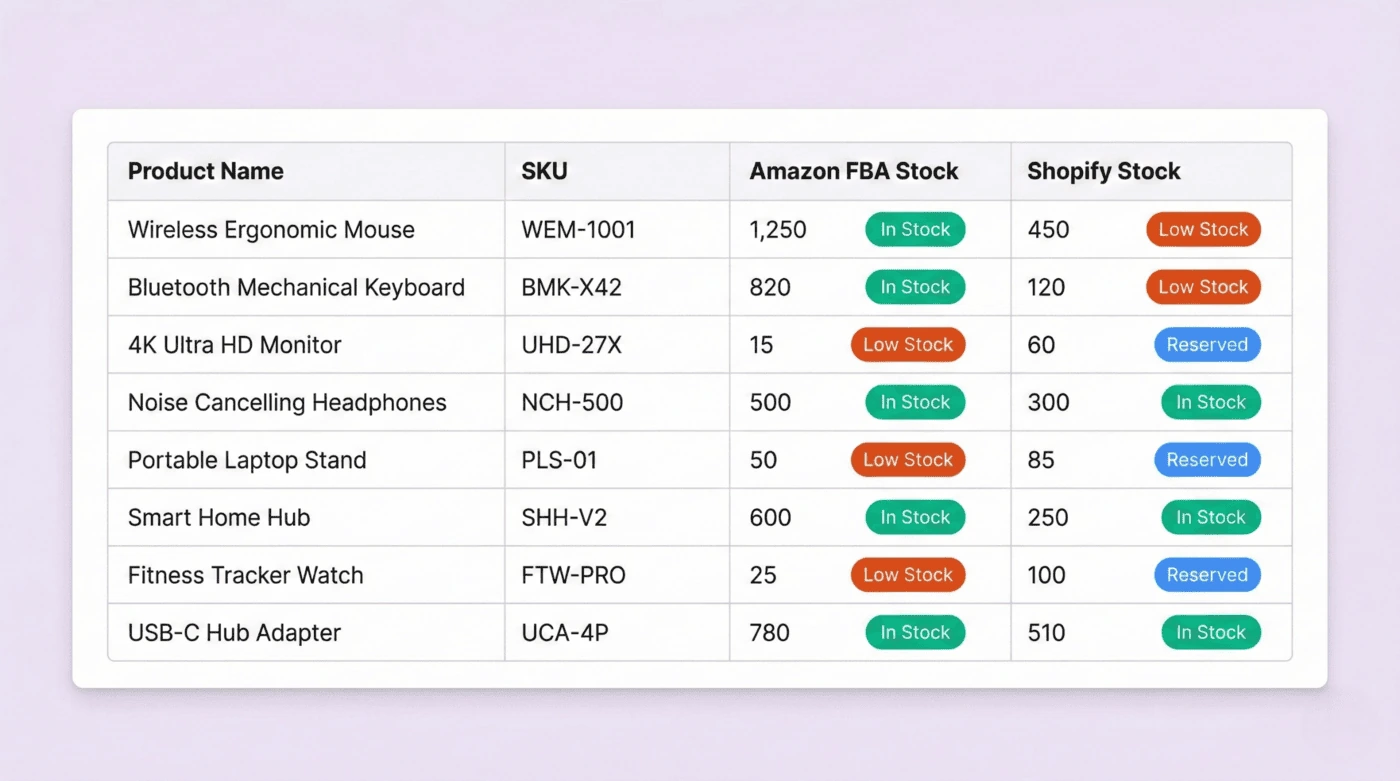
Unify Stock and Costs Without Losing Channel Detail
Ops and finance get one company-wide inventory position. Every transaction still keeps its channel, location, batch, cost, and fee detail, so Amazon, Shopify, and other channels can be analyzed separately.
Total Stock Across the Business
Ops can see total units by SKU and location across every connected channel, including on-hand, reserved, inbound, and in-transit stock.
Inventory and COGS for the Books
Receipts, transfers, and sales retain their batch costs, giving finance supportable inventory balances and FIFO COGS in QuickBooks or Xero.
Profitability by Channel
Compare revenue, fees, COGS, contribution margin, and stock velocity by marketplace or store using the same costs as the company books.
Replenishment from Combined Demand
Plan purchases from combined demand, then decide where stock should go based on channel velocity, lead times, and availability.
Stop Reconciling Channels in a Master Workbook
Channel exports create snapshots. NeonPanel keeps the consolidated view and the channel detail current together.
Spreadsheet Stack
-
Inventory availability
Separate exports plus a manually maintained total
-
Batch and cost history
Averages copied between tabs after the fact
-
Accounting
Inventory roll-forward and COGS rebuilt at close
-
Channel performance
New pivots and reconciliations for every review
NeonPanel
-
Inventory availability
Current units by SKU, location, status, and channel
-
Batch and cost history
Receipt batches, landed costs, and FIFO consumption stay connected
-
Accounting
Inventory movements and costs flow into QuickBooks or Xero
-
Channel performance
Revenue, fees, COGS, and contribution by channel
Know What You Have, What It Cost, and Where It Performs
The value of unified inventory is not another dashboard—it is having dependable answers without another reconciliation cycle.
How Much Can We Sell Right Now?
See available stock across every channel and fulfillment location while preserving reserved, inbound, and in-transit states.
Which Channel Is Actually Profitable?
Compare channel contribution using the batch costs, COGS, fees, and refunds that also support your financial reporting.
What Should We Reorder and Where?
Use combined demand for purchasing, then direct inventory using channel velocity, stockout risk, and location-level availability.
Multi-Channel Inventory Questions
Yes. NeonPanel connects FBA, AWD, 3PL, and owned warehouse locations in one inventory system. When the same physical stock serves several channels, fulfillments deduct from the right location and batch so ops sees accurate units and finance sees matching inventory value and COGS.
Every receipt, transfer, and sale ties to batch history and FIFO unit costs. Inventory movements feed the same ledger that posts into QuickBooks or Xero, so warehouse counts and balance-sheet inventory are not maintained in separate systems.
Yes. Unification does not erase channel detail. NeonPanel keeps the marketplace or store on every relevant transaction, so you can compare revenue, fees, COGS, contribution, and stock velocity by channel while using the same cost data as the company books.
Channel exports go stale and the master roll-up is always catching up. NeonPanel syncs channel and warehouse events into one operating ledger with batch costs and an audit trail, so both the company-wide view and each channel view stay current.
Explore Inventory by Channel
Go deeper into Amazon, Shopify, inventory resolution, and a real operator story.