
Landed Costs and Batch Economics You Can Defend
NeonPanel ties freight, duty, prep, and supplier invoices to each receipt batch. Shipment-level allocation feeds true FIFO consumption, so gross margin reflects dock-level economics and replays cleanly when bills change—without rebuilding spreadsheets.
- Accounting
- Inventory
- Forecasting
- AI access

Margin That Survives Questions, Not Just Dashboards
Defensible margin starts with cost basis you can explain line by line. NeonPanel ties each shipped unit to the batch it consumed and the landed inputs behind it, so operators, controllers, and investors stay on one evidence trail.
Trusted by 200+ Ecommerce Teams












Core Capabilities
Shipment-Batch Economics
Receipt and movement history attach each unit to its batch economics—not one averaged SKU rate.
Landed Cost Allocation
Freight, duty, 3PL prep, and related charges land in inventory basis with traceable inputs, not generic overhead.
Retroactive Recalculation
Replay batch and balance impacts when freight or duty notices change—without quarter-end manual rebuilds.
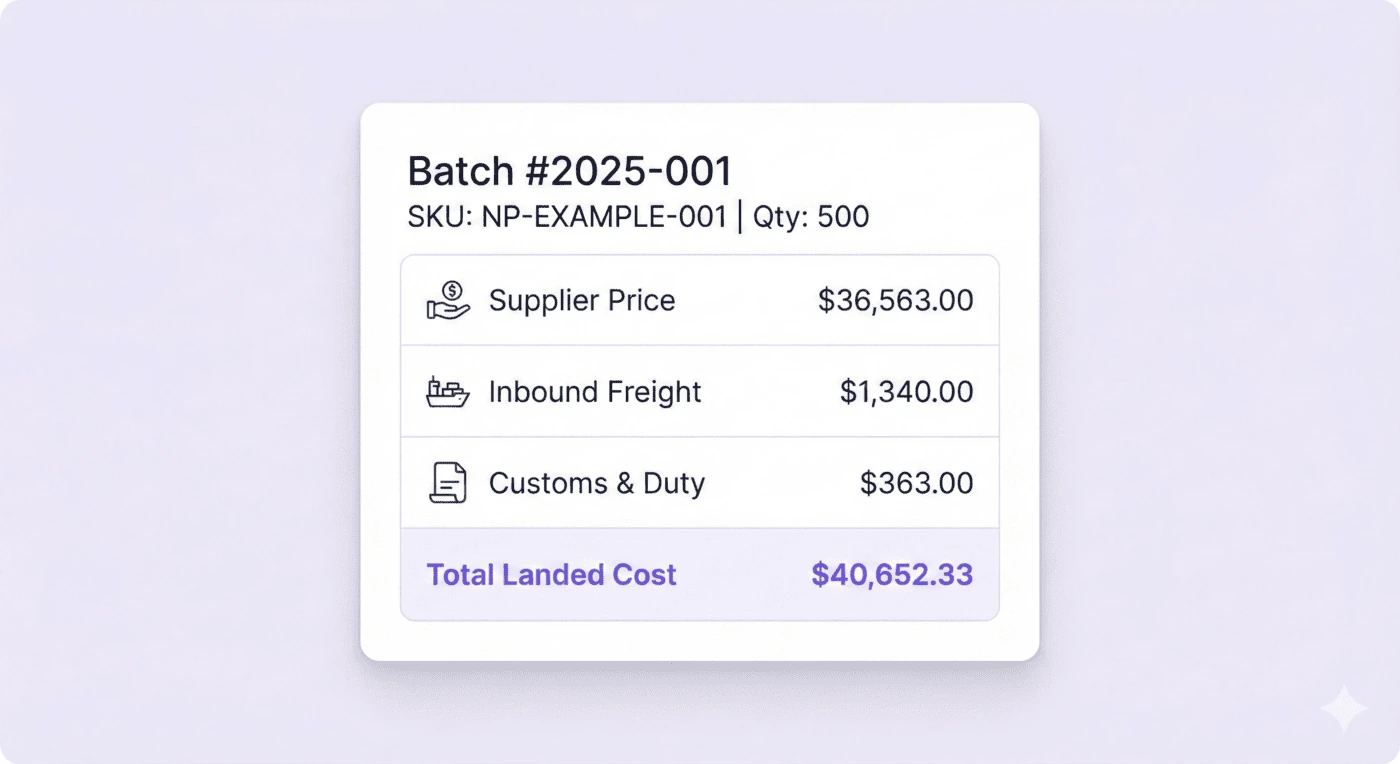
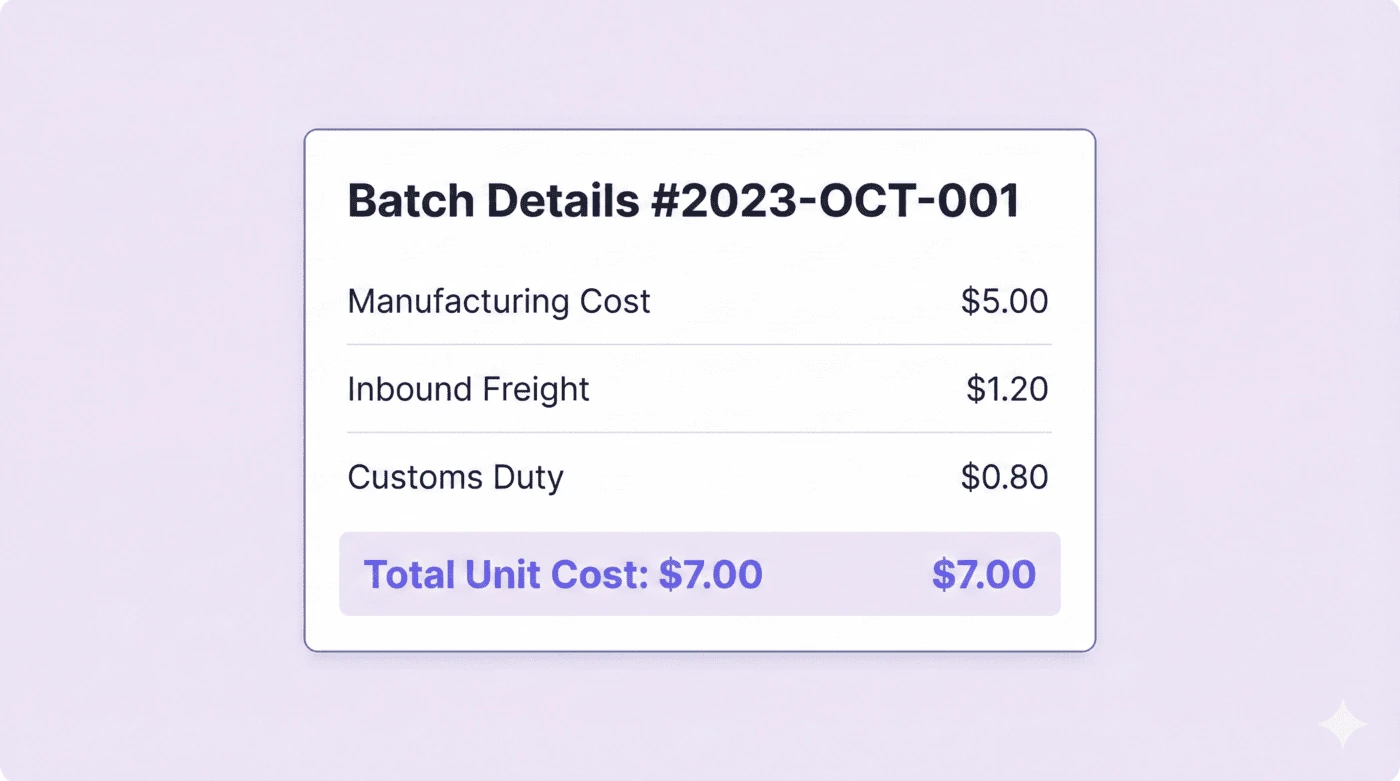
Batch History Your Team and Finance Share
On Amazon and Shopify, NeonPanel ties settlements and shipped units to batch landed inputs and FIFO consumption—margin follows receipts and movements, not side estimates.
Open any batch to see the supplier price, inbound freight, customs duty, and prep that formed its unit cost, alongside every order that has consumed from it.
From Factory Cost to Per-Unit Landed Cost
Freight, duty, 3PL prep, and related charges land in inventory basis with traceable inputs, not generic overhead.
The result is an inventory basis a controller can trace back to a specific invoice, shipment, and receipt date.
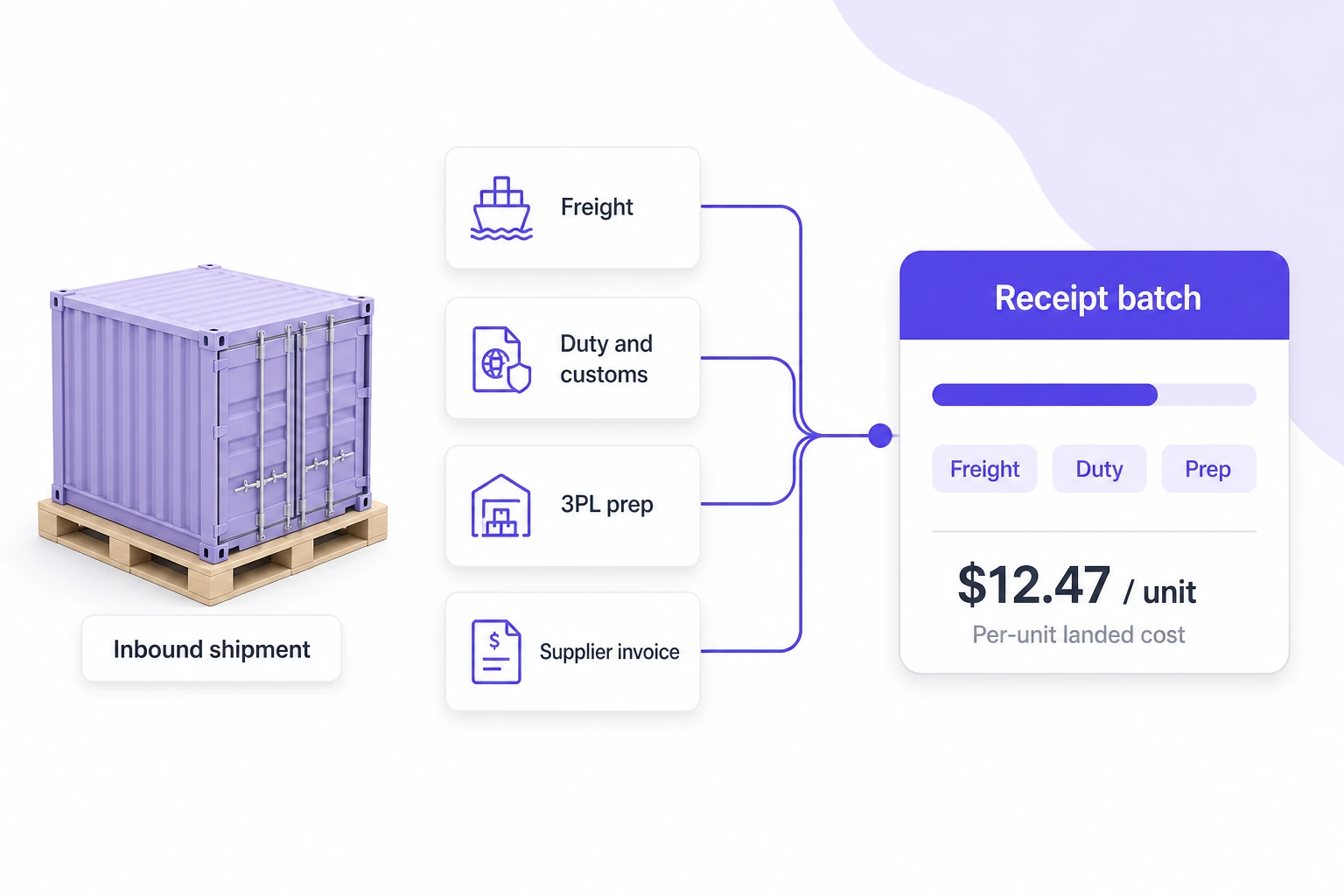
Shipment-Batch Economics in Three Moves
Receive, allocate, consume — the same three moves behind every unit of COGS NeonPanel posts.
Receive & Batch
Each inbound receipt opens its own batch, carrying the unit count, receipt date, and destination location.
Allocate Landed Inputs
Freight invoices, duty notices, and 3PL prep charges attach to that batch and divide across its units into a per-unit landed cost.
Consume in FIFO Order
Shipped units draw down the oldest open batch first, so every order carries the cost basis of the goods it actually consumed.

Each Shipped Unit Traces to Its Batch
Consumption follows receipt order rather than a running average. A unit that shipped in March carries the March batch's landed cost even when April freight came in cheaper.
That is what keeps gross margin reconcilable at the SKU and order level instead of only at the category total.
Connects to the tools you already use
NeonPanel ties Amazon and Shopify settlements to batch landed inputs and FIFO consumption—the same ledger that posts into QuickBooks or Xero.
-
Amazon
Seller Central and Vendor Central settlements, FBA and AWD inventory, and fee lines reconcile into QuickBooks or Xero on the same heartbeat as your ops team.





Averaged SKU Rates vs Shipment-Batch Truth
Cost basis, freight and duty treatment, late bills, and evidence trail — side by side.
Spreadsheet / Averaged Approach
-
Cost basis
One averaged SKU rate across every receipt
-
Freight and duty
Booked as generic overhead, outside inventory basis
-
Late bills
Quarter-end manual rebuilds when notices change
-
Evidence trail
Margin that survives a dashboard, not a question
NeonPanel Shipment-Batch Economics
-
Cost basis
True FIFO landed cost per receipt batch
-
Freight and duty
Freight, duty, and 3PL prep land in inventory basis with traceable inputs
-
Late bills
Retroactive recalculation replays only the affected batches
-
Evidence trail
Every shipped unit traces to its batch and the landed inputs behind it
Replay When Freight or Duty Notices Change
When landed inputs change after receipt, NeonPanel replays only the affected batches.

When freight or duties change, NeonPanel recalculates inventory value and consumption so COGS can flow from the refreshed basis when your workflow posts it.
A carrier bill that lands three weeks after receipt still attaches to the batch it belongs to.
Customs adjustments reprice the affected batch and every unit still sitting in it.
A revised supplier price flows through unit cost without disturbing unrelated batches.
Balances and consumption update in place, so month-end is a review rather than a reconstruction.
Where Landed Cost Sits in Inventory
Landed cost and batch FIFO live in Inventory Management — shipment-level inventory truth on the same ledger as Accounting & Finance and Forecasting & Replenishment.
Essentials Averages, Professional Runs Shipment Batches
PO-Level Landed Cost Averages
Landed cost averaged across the purchase order and applied at market level — enough for a multi-channel P&L finance can defend from day one.
Shipment-Batch FIFO Economics
True FIFO at the receipt batch, with in-transit states and shipment-level landed inputs behind every unit of COGS.
Where to Go Next
This page covers shipment-batch landed economics, consumption history, and replay when bills change. Use the tiles for automatic COGS into QuickBooks or Xero, the ecommerce accounting hub, inventory depth, or pricing—same NeonPanel ledger, distinct jobs.
Landed Cost and FIFO — Common Questions
Freight, duty, 3PL prep, and related charges land in inventory basis with traceable inputs, not generic overhead. NeonPanel ties freight, duty, prep, and supplier invoices to each receipt batch. Shipment-level allocation feeds true FIFO consumption, so gross margin reflects dock-level economics and replays cleanly when bills change—without rebuilding spreadsheets.
Receipt and movement history attach each unit to its batch economics—not one averaged SKU rate. Defensible margin starts with cost basis you can explain line by line. NeonPanel ties each shipped unit to the batch it consumed and the landed inputs behind it, so operators, controllers, and investors stay on one evidence trail.
Replay batch and balance impacts when freight or duty notices change—without quarter-end manual rebuilds. When freight or duties change, NeonPanel recalculates inventory value and consumption so COGS can flow from the refreshed basis when your workflow posts it.
Defensible margin starts with cost basis you can explain line by line. NeonPanel ties each shipped unit to the batch it consumed and the landed inputs behind it, so operators, controllers, and investors stay on one evidence trail. On Amazon and Shopify, NeonPanel ties settlements and shipped units to batch landed inputs and FIFO consumption—margin follows receipts and movements, not side estimates.
Post COGS to QuickBooks or Xero as orders settle, grounded in the batch and landed-cost economics from this page. See Automatic COGS →
Essentials vs Professional, modules, and Forecasting & Replenishment tiers. Compare Essentials vs Professional →